


Recently, a group of teachers and students from the School of Management of Zhejiang University visited Hongzun Technology, a subsidiary of Global New Material International, and held a special discussion on the company’s overseas practice, global strategic layout and career planning. The activity was led by Professor Chen Fadong from the School of Management of Zhejiang University, together with dozens of student representatives from MBA/Master’s programs. Dr. Su Ertian, Chairman and Chief Executive Officer of Global New Material International, Jin Zengqin, Vice President of Global New Material International, Shen Hui, Chief Human Resources Officer of Global New Material International, and the management team of Zhejiang Hongzun Technology attended the exchange meeting. The event, in the form of “site tour + idea-sharing + Q&A”, provided students with a systematic understanding of the global practices and talent demands of leading new materials enterprises on the front line of the real industry.
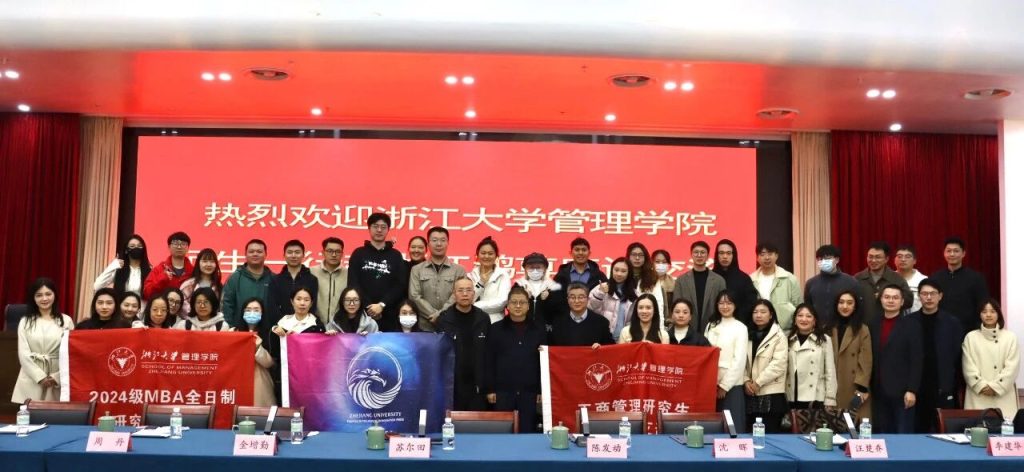
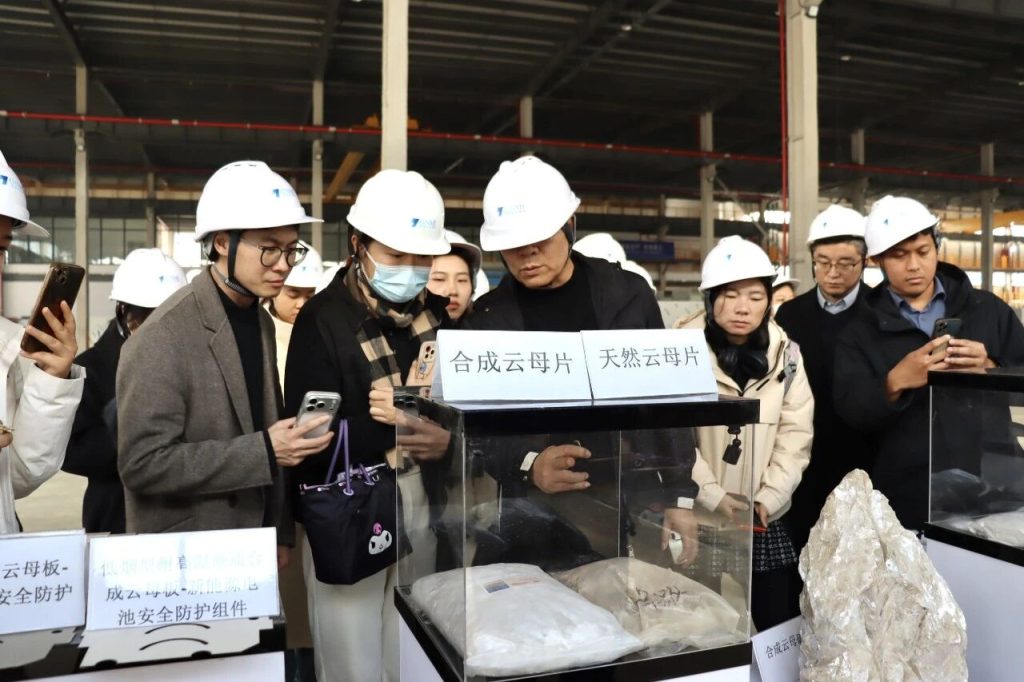
Field Visit: Entering the “Global Outpost” of new materials enterprises
Accompanied by the head of China Hongzun Technology, teachers and students from the School of Management of Zhejiang University successively visited the production site, process display and product application area to learn about the company’s layout in synthetic mica preparation, application development, intelligent production, etc. The students asked questions as they walked and engaged in lively exchanges on topics such as “core process routes”, “quality control standards”, and “ways of collaboration with overseas bases in Germany, South Korea, etc.”
Hongzun representative introduced that Zhejiang Hongzun Technology is one of the important new materials platforms of Global New Material International in China, undertaking the research and development and industrialization tasks of high-end synthetic mica preparation and related application products. Its products are widely used in global markets such as high-end cosmetics, automotive coatings, electronics, new energy, etc., and are an important part of the company’s overseas expansion and global layout.
Topic Sharing: “Going global roadmap” from Guangxi to the World
At the symposium, Dr. Su Ertian shared with the faculty and students of Zhejiang University the overseas expansion and globalization practices of Global New Material International over the years under the main thread of “From Local Enterprise to Global New Material Group”.
He pointed out a fundamental reality that enterprises are facing today: markets, competition, supply chains and rules are all globally oriented. For key new materials companies represented by synthetic mica, “being a small company in just one region” has become difficult to cope with the future industrial landscape.
Based on the company’s business layout in Germany, the United States, South Korea, Japan, China and other places, Dr. Su Ertian systematically sorted out the global thinking of Global New Material International from three aspects:
• A clear industrial positioning: Focus on “bottleneck” basic materials such as synthetic mica, and integrate technology, brand and application resources globally to be “one of the few companies that truly have a say”;
• A phased going global cadence: First achieve breakthroughs in high-certified, high-margin scenarios such as high-end cosmetics and automotive coatings, and then gradually expand into broader fields such as new energy and electronics;
• Systematized compliance and risk control: Build a unified quality, compliance, and ESG management framework around regulatory requirements in different countries and regions, and turn “sustainability” and “trustworthiness” into global passports for enterprises.
He stressed that going global is not just about “selling goods”, but about finding your position in the global supply chain and earning the respect and trust of global customers with long-termism, engineering capabilities and compliance capabilities.
Employment and growth: How to plan your career path in a globalized enterprise?
When it comes to employment and career development that students are most concerned about, Dr. Su Ertian combines “global enterprises” with “personal growth paths” and offers several very practical suggestions:
Firstly,to broaden your perspective up to a global scale as early as possible. Whether you are in management, technology or investment in the future,it is hoped you position yourself as someone who can work in a global system, rather than being content with a small circle of opportunities. This means understanding national strategies, industry trends and going global, and putting personal choices in a bigger picture.
Secondly, to lay a solid foundation of “professionalism + cross-disciplinary integration”.For new materials and global enterprises, the most needed talent is often a combination of two capabilities: having a solid professional skill (such as process, product, finance, risk control, data), and constantly catching up in management, cross-cultural communication, compliance, etc., to “string together” different elements in complex scenarios.
Next, to treat your first job as “laying the foundation” rather than “winning praise”.He encourages students to choose positions that allow them to see the real world, deal with complex problems, and grow under pressure: “A career is lifelong, and truly valuable growth often occurs when you are willing to face difficult problems and take responsibility.”
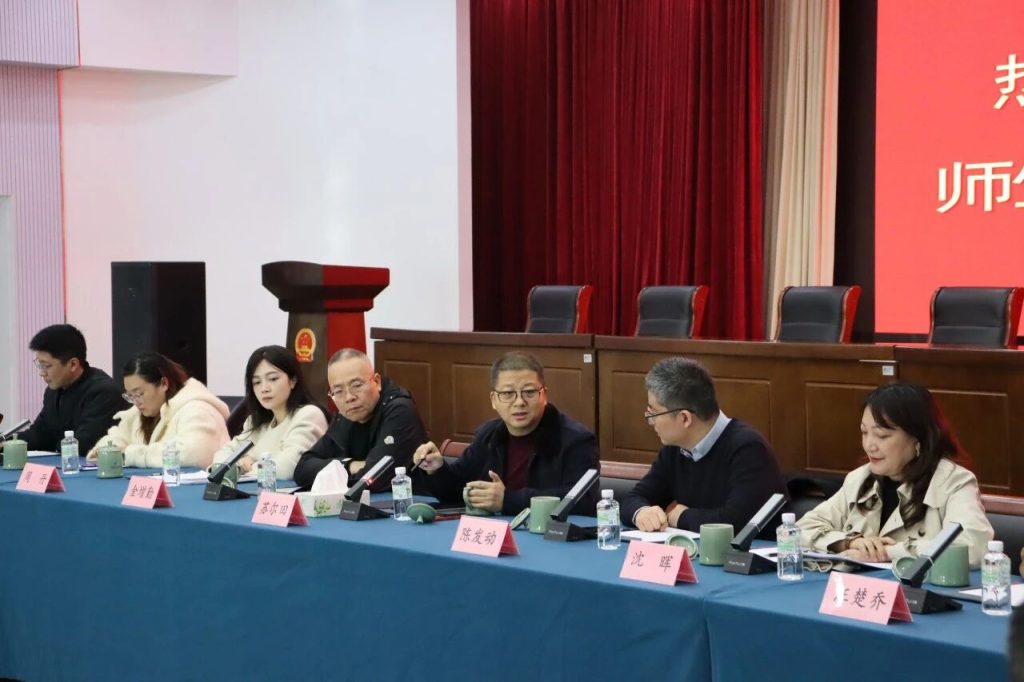
Two-way interaction: from going global to career choices
During the interactive session, students from the School of Management of Zhejiang University raised a lot of key questions about going global and employment:
• “How do companies strike a balance between speed and compliance when advancing globalization in different countries and regions?”
• “What are the biggest challenges when synthetic mica goes global in emerging applications such as new energy and AI?”
• “What capabilities do companies value more for MBA/management graduate students? How can you really grow through job rotation?”
GNMIs’ international management team answered questions one by one from transnational operations, supply chain synergy, customer structure adjustment, to school enrollment and training paths, job rotation mechanisms and mentorship systems, sharing a lot of first-hand experience and specific practices.
Upon career suggestion, HR head of GNMI exchanged views with the students on topics such as “How to choose the first job”, “How to convert the technical path and the management path”, “How to improve language and cross-cultural skills in a global enterprise”, and encouraged students to pay attention to both the platform and the industry in job hunting and to see their true interests and strengths clearly.
School-enterprise collaboration: making overseas practice a classroom for young people’s growth
This event, “Teachers and students from the School of Management of Zhejiang University visit Global New Material International and China Hongzun Technology,” is an in-depth interaction centered on overseas experience sharing, global strategy exchange and employment guidance, as well as an active exploration of “mutual pursuit” between universities and enterprises.
The School of Management of Zhejiang University said it will continue to bring more real industrial topics into the classroom through forms such as enterprise visits, case co-building, and project practice, helping students understand the theoretical framework while seeing the complexity and opportunities of the real world.
Global New Material International said it will continue to open up the scenarios of new materials and global practice, and carry out closer cooperation with universities including Zhejiang University to build a higher-level university-enterprise collaboration platform in areas such as research projects, talent cultivation, and internship practice, so that more young students can participate in the process of Chinese enterprises going global, find their position and contribute their strength.